Why Treblle
Platform
Trust & Compliance
Pricing
Resources
Company

API Analytics

API Analytics That Tells You Who, What, Where, and Why

Treblle captures consumer geolocation, device intelligence, endpoint usage patterns, and performance metrics across every API request, with custom data retention and the period-over-period comparisons your team needs to make product decisions with confidence.

Capture every request with full context

One SDK integration begins capturing 100% of API traffic immediately. Treblle enriches each request with consumer geolocation, device type, HTTP client identity, user agent details, and any custom metadata your team attaches.

Search and slice any dimension in real time

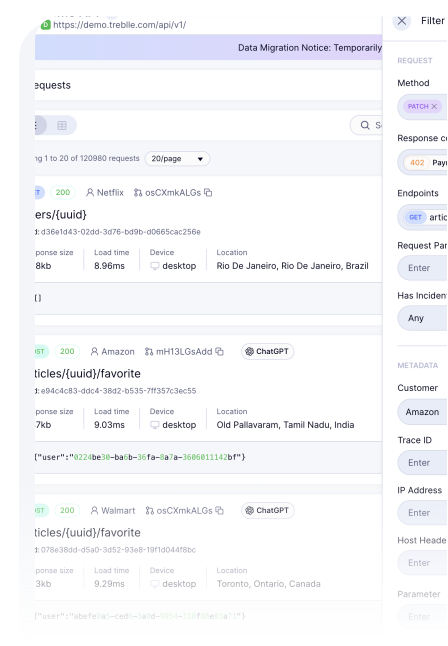
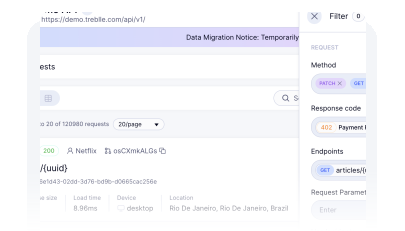
Every data point captured becomes a filterable dimension. Filter by country, device type, HTTP client, endpoint, consumer, status code, latency range, or any custom metadata field, instantly, without writing a query.

Compare periods, track trends over time

With custom data retention, your team defines how long history is kept and can compare this quarter against last year, investigate a performance regression against a baseline from months ago, or track adoption growth across any time window.

Agentic AI cards

What is API Analytics?

Understanding how your API is actually used

API analytics is the collection, storage, and analysis of data about how APIs are used: which endpoints get traffic, which consumers are calling them, where requests originate, what devices and HTTP clients are involved, and how performance changes over time. Unlike infrastructure monitoring, which tells you whether your API is up and how fast it responds on average, API analytics tells you who is using specific endpoints, how usage is growing or shifting, which consumers are disproportionately concentrated on a single endpoint, and whether this month's performance is better or worse than last month's. Treblle captures this data at the request level across 100% of API traffic, with custom data retention and the ability to slice any dimension in real time.


Free Ebook

Buyer's Guide to API Observability

Consumer Intelligence

Know exactly who is using your API, from where, and on what

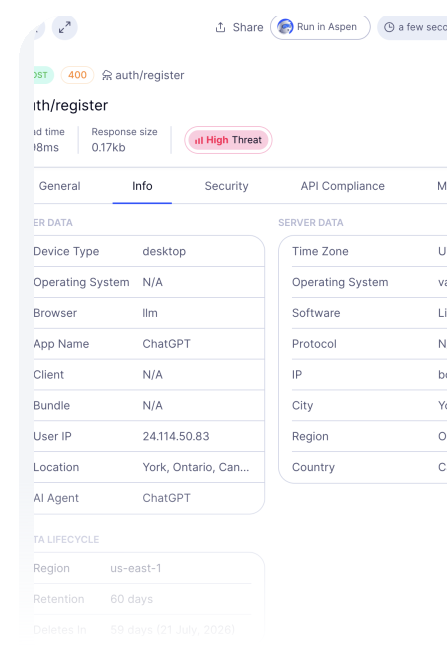
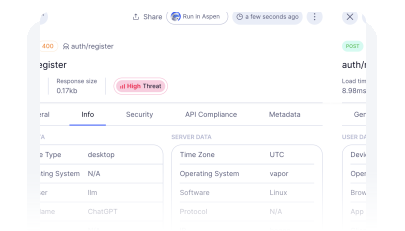
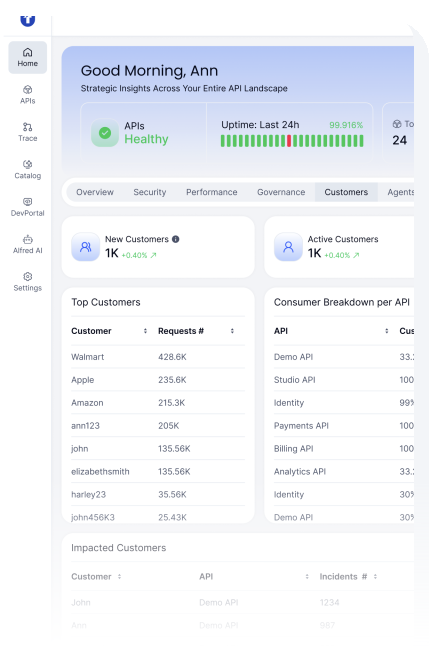
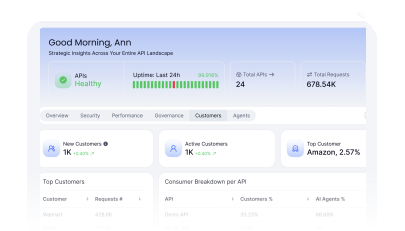
Generic request counts tell you how busy an endpoint is. Consumer analytics tells you whether that traffic is coming from enterprise customers in Germany using a mobile SDK or anonymous scripts from a single cloud region. Treblle captures geolocation per request, identifies device types and operating systems through Device Intelligence, parses HTTP client identity, and interprets user agent strings to give your team a full consumer picture without requiring explicit consumer registration.

Consumer Geolocation

Captures the geographic origin of every API request at the country, region, and city level. Understand where your API is being used without requiring consumers to self-report location.

Device Intelligence

Identifies device type, operating system, and platform for every request. Distinguish mobile, desktop, and server-to-server traffic automatically across your entire API surface.

HTTP Client Detection

Identifies the HTTP client or library sending each request, from curl to Axios to Retrofit. Gives teams visibility into how consumers are integrating, not just that they are calling.

User Agent Parsing

Parses and normalizes user agent strings into structured data. No manual regex maintenance or user agent database management required to get clean, queryable client data.

Usage and Performance

Usage patterns and performance data across every endpoint

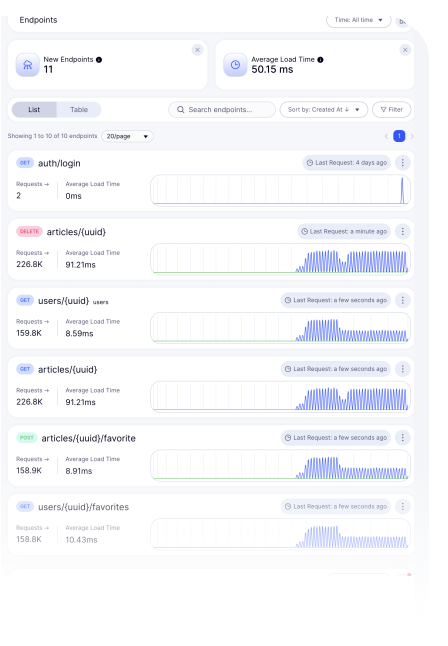
Top-level request counts hide the endpoints that actually matter. A single endpoint handling 70% of your traffic with a degrading p95 latency is a different problem than one with low volume and high errors. Treblle's Endpoint Usage Tracking shows consumption distribution across every endpoint, and Request Performance Metrics breaks down latency percentiles, throughput, and error rates per endpoint so performance problems appear against the usage context that makes them actionable.

Endpoint Usage Tracking

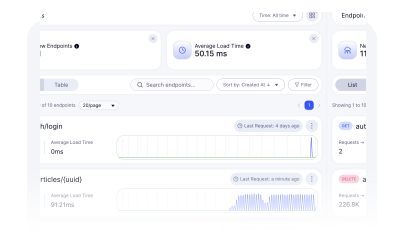
Tracks request volume, consumer count, and growth rate per endpoint. Surfaces which endpoints drive the most traffic, which are growing fastest, and which are unused.

Request Performance Metrics

Captures latency at p50, p90, p95, and p99, plus throughput and error rates per endpoint. Performance data tied to usage volume so you prioritize the right optimizations.

Real-Time Filtering

Search and filter any slice of your API traffic instantly

Answering 'which enterprise customers in the UK called this endpoint with a 401 error yesterday between 2pm and 4pm' should not require a custom query. Treblle's Real-Time Search and Filtering makes every captured dimension a first-class filter: country, device, HTTP client, endpoint, status code, latency range, consumer identifier, and any Custom Metadata your team attaches to requests. The answer to any usage question appears in seconds, not after you write a SQL query and wait for a scheduled report.

Real-Time Search and Filtering

Filter across every captured dimension instantly: endpoint, country, device, HTTP client, status code, latency, consumer, and more. No query language required, results appear as you filter.

Custom Metadata

Attach arbitrary key-value data to API requests to create business-specific filter dimensions. Tag requests with account tier, feature flag, subscription plan, or any context relevant to your analysis.

Historical Depth

Retention on your terms, with built-in period comparison

Most analytics platforms either expire detailed data after 90 days or roll it up into hourly aggregates, which means you cannot investigate a performance regression from six months ago or compare this quarter's consumer growth against the same quarter last year at the request level. Treblle lets you define your own retention policy so data stays available for as long as your compliance, audit, or business requirements demand, and Period-Over-Period Comparison is built into the analytics interface so any metric can be measured against any previous period without exporting data to a separate BI tool.

Custom Data Retention

Define your own data retention policy rather than accepting an arbitrary vendor-imposed window. Keep full request-level analytics for as long as your compliance, audit, or business requirements demand.

Period-Over-Period Comparison

Compare any metric across any two time windows directly in the analytics interface. Measure this month versus last month, Q1 versus Q1 last year, or this week versus the two weeks before a release.

Related Capabilities

Treblle works best when working in unison. Check out other capabilities that will help you make the most out of your API landscape.

API Observability

The same full-payload capture that powers observability simultaneously feeds compliance evaluation, with no additional instrumentation.

Explore API Observability

API Intelligence

Cross-signal intelligence that combines observability, security, governance, and compliance data into predictive risk detection and executive dashboards.

Explore API Intelligence

API Security

Compliance signals feed directly into security threat scoring, so a GDPR violation on an endpoint raises the security risk level for the same traffic.

Explore API Security

API Analytics: Common Questions

API analytics is the collection, storage, and analysis of data about how APIs are used: which endpoints get traffic, which consumers are calling them, where requests originate, what devices and HTTP clients are involved, and how performance changes over time. Unlike application performance monitoring, which focuses on infrastructure health, API analytics focuses on consumer behavior and usage patterns to inform product, engineering, and business decisions.

Treblle captures consumer geolocation, device type, HTTP client identity, and user agent data for every API request. This data is enriched with custom metadata your team can attach to requests, such as account tier or feature flag, so you can segment usage by any dimension relevant to your business. Consumer Fingerprinting ties multiple requests back to individual consumers even without explicit authentication identifiers.

Treblle offers custom data retention, meaning your team defines how long API analytics data is kept rather than being locked into an arbitrary vendor-imposed window. This gives you full request-level data for as long as your compliance, audit, or business requirements demand, without managing separate archival exports.

Period-over-period comparison lets you measure how API usage, performance, and error rates have changed between two time windows, such as this week versus last week, or this quarter versus the same quarter last year. Treblle's analytics includes built-in period comparison so you can see whether a metric is genuinely trending or just reflecting normal variation, without building a custom dashboard in a separate BI tool.

Yes. Custom Metadata in Treblle lets you attach arbitrary key-value pairs to API requests, which then become filterable dimensions in the analytics interface. Common uses include tagging requests with account tier, feature flag state, A/B test variant, or any business context relevant to your analysis. This means your API analytics reflects your business model, not just generic HTTP data.

Treblle's Device Intelligence and User Agent Parsing distinguish between mobile devices, desktop browsers, server-to-server API calls, and specific HTTP clients automatically. Each request is categorized by device type, operating system, and client application so you can analyze usage patterns across consumer segments without writing custom parsing logic or maintaining a user agent database.

Turn API traffic into business insight

Talk to our architecture team about deploying full-depth API analytics across your organization.

Treblle

All Systems Operational

Gartner: Magic Quadrant, 2025

Gartner AI API Strategy, 2025

Everest Group: Enterprise App Integration Platforms, 2026

GDPR CompliantSOC 2ISO 27001:2022HIPAA
© 2026 Treblle. All Rights Reserved.
Privacy Policy
Terms of Service
LinkedInYouTubeGitHubX / Twitter
© 2026 Treblle. All Rights Reserved.
Privacy Policy
Terms of Service
LinkedInYouTubeGitHubX / Twitter