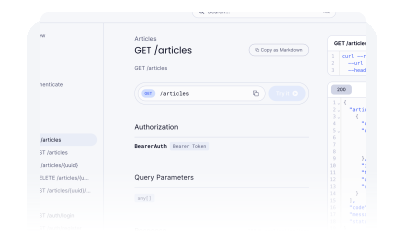
Treblle generates API documentation from live traffic, keeps it synchronized with your CI/CD pipeline, detects when specs drift from production reality, and publishes everything to a developer portal consumers can use the day they integrate.
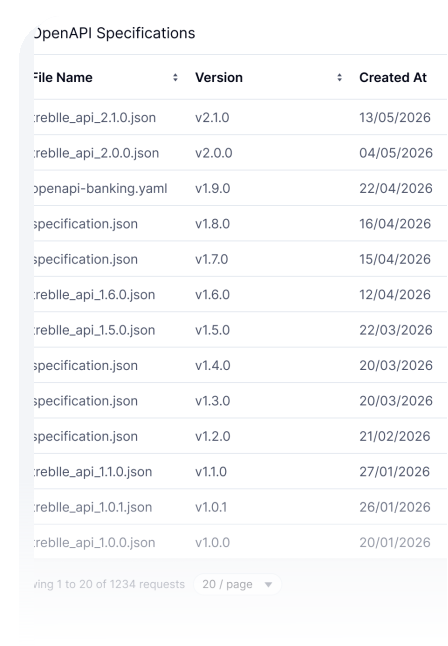
Install the Treblle SDK or import an existing OpenAPI spec. Treblle begins generating and enriching documentation immediately from live traffic, filling in what the spec misses with observed behavior.
CI/CD Sync keeps documentation current automatically. When code ships, documentation updates. Spec Drift Detection surfaces any endpoints where behavior and spec have diverged so nothing falls out of date silently.
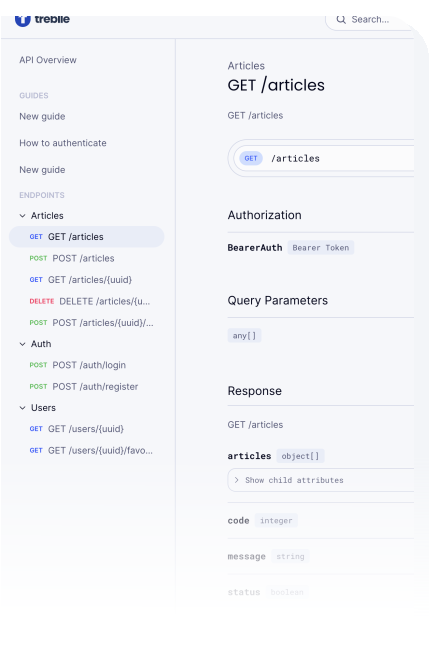
The Developer Portal publishes your documentation with interactive docs, SDK downloads, and the AI Integration Assistant. Consumers can try your API and get integration help without waiting for a support response.
What is Auto-Generated API Documentation?
Auto-generated API documentation is reference material produced directly from your API traffic, specifications, or code rather than written and maintained by hand. Manually maintained documentation drifts from reality as APIs evolve: parameters get added without spec updates, response shapes change, and authentication requirements shift. Treblle solves this by generating documentation from live API behavior, synchronizing it with every deployment via CI/CD integration, and continuously monitoring the gap between your OpenAPI spec and production traffic through Spec Drift Detection. The result is documentation that developers can trust because it reflects what the API actually does, not what someone intended when the spec was last edited.

Always Current
The standard API documentation lifecycle is: engineers build endpoints, someone writes docs later, docs get out of date immediately. Treblle breaks this by generating documentation directly from live API traffic and keeping it synchronized with your deployment pipeline. When a new endpoint ships, Treblle sees it. When a response field changes, Treblle surfaces the drift. Nobody has to remember to update a wiki page or YAML file.
Generates accurate API reference documentation from live traffic and specifications. Every endpoint, parameter, and response shape documented from observed behavior, not recalled from memory.
Connects to your deployment pipeline so documentation updates automatically when code ships. No separate publishing step, no lag between release and updated docs.
Monitors the gap between your OpenAPI spec and actual production API behavior. Surfaces endpoints where behavior has diverged from the spec before consumers encounter the discrepancy.
Developer Portal
Most developer portals are documentation archives: static pages that got published once and slowly became wrong. Treblle's Developer Portal is generated from the same live data that powers internal documentation, which means it is as current as your last deployment. Documentation Previews let you review how a portal update will look before it goes live. Documentation Versioning keeps previous API versions accessible for consumers who have not migrated yet.
A consumer-facing portal with interactive documentation, live API exploration, and integration resources generated automatically from your API data. No separate publishing workflow.
Preview how documentation updates will appear to consumers before publishing. Catch presentation issues before they reach your API's external audience.
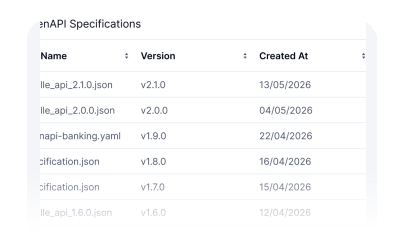
Maintains accessible documentation for previous API versions alongside current versions. Consumers on older integrations find what they need without searching through changelogs.
Integration Tooling
Consumers need more than documentation to integrate: they need collections they can run immediately in tools like Postman or Insomnia, and SDKs in the language their team uses. Treblle generates both from your OpenAPI spec automatically. Import an existing spec or let Treblle generate one from live traffic, and consumers get a working collection and SDK immediately rather than spending a day writing boilerplate from scratch.
Import existing OpenAPI specifications directly into Treblle. Documentation, collections, and SDKs are generated from the spec immediately, with live traffic data enriching and validating accuracy.
Generates request collections for API testing tools from your spec. Consumers can import and run a fully configured collection immediately without building it by hand.
Produces client libraries in multiple languages from your API specification. Reduces consumer integration time from days to hours by eliminating the boilerplate writing phase.
AI-Assisted Onboarding
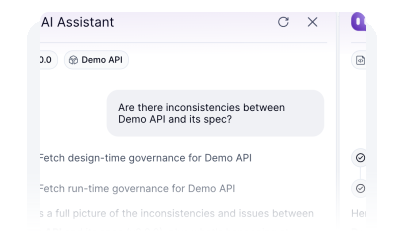
Support tickets slow API adoption. Developers hit a confusing response shape, can't find the authentication parameter they need, or aren't sure how to handle a 429 rate limit response, and they open a ticket. Treblle's AI Integration Assistant answers these questions in plain language, grounded in your actual API documentation and production behavior, so consumers get accurate answers immediately rather than waiting for a human response.
Answers consumer integration questions in plain language using your actual API documentation as the knowledge source. Reduces support load and unblocks developers without requiring human intervention.
Treblle works best when working in unison. Check out other capabilities that will help you make the most out of your API landscape.
API Catalog
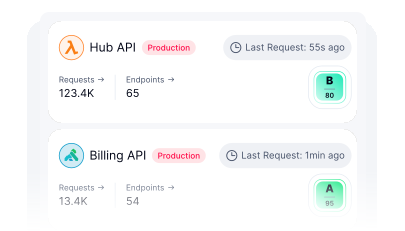
Promote discovered APIs into a browsable, organization-wide catalog with interactive documentation for every team.
API Governance
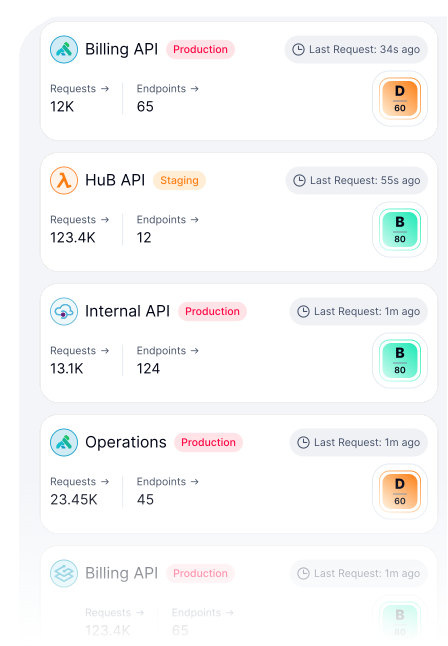
Governance scores factor in compliance posture alongside design quality, performance, and security, giving a complete picture of each API's maturity.
API Testing
Aspen, Treblle's desktop API client for Windows and Mac, uses the collections generated from your documentation for fast, local-first testing without sending traffic to external services.
All Systems Operational
Gartner: Magic Quadrant, 2025
Gartner AI API Strategy, 2025
Everest Group: Enterprise App Integration Platforms, 2026