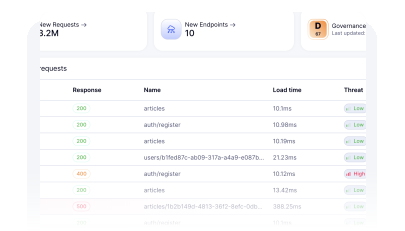
Treblle correlates discovery, design quality, runtime behavior, security events, and consumer usage into a unified intelligence layer, so your team always knows what is running, how healthy it is, and what needs attention before an incident tells them.
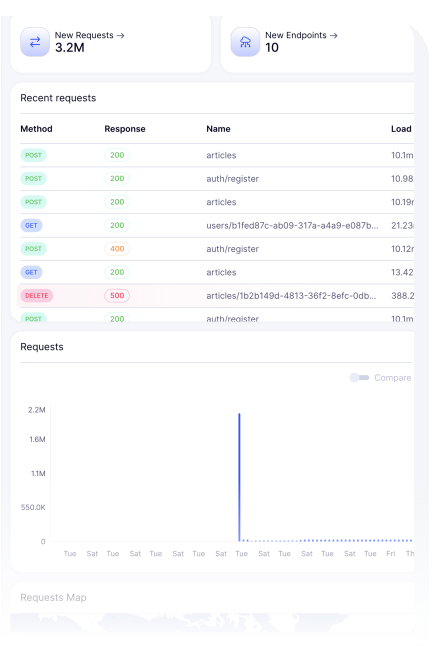
Treblle scans source code repositories, connected gateways, and live traffic continuously to build a complete, self-updating API inventory. Every endpoint appears in the catalog regardless of how it was deployed or documented.
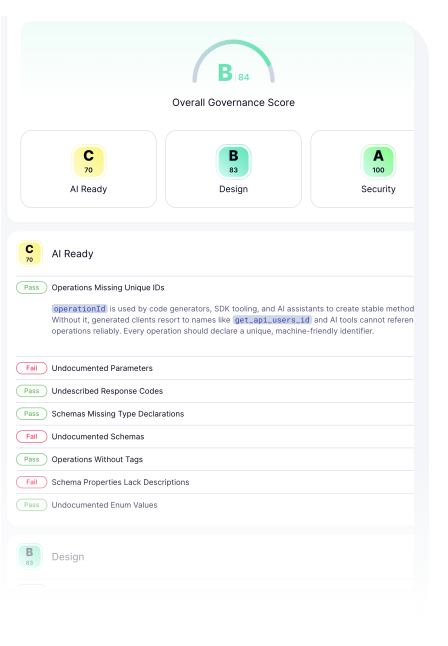
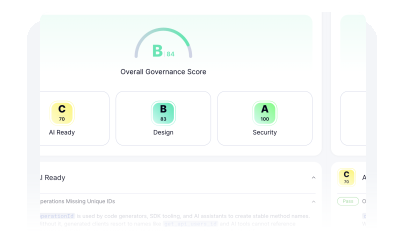
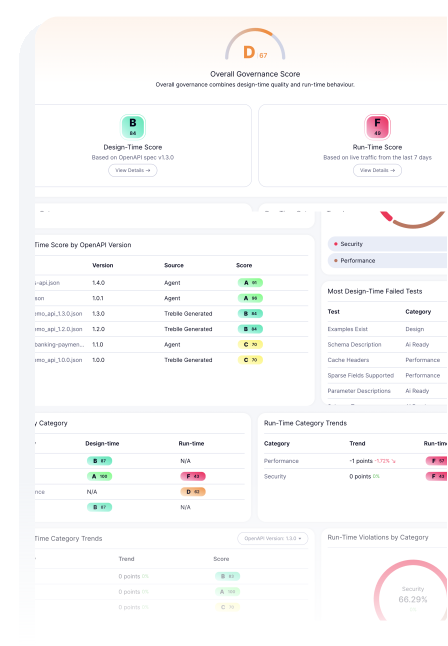
Each API is evaluated across design quality, runtime performance, security posture, documentation, and compliance. Signals from each dimension are correlated into a single Composite API Heartbeat score that updates continuously.
Predictive risk signals flag APIs likely to degrade before incidents occur. Executive Dashboards translate the full picture into formats your leadership team can act on without needing to interpret raw metrics.
What is API Intelligence?
API intelligence is the aggregation and analysis of signals from across the full API lifecycle, including discovery, design quality, runtime behavior, security events, and consumer usage, into a unified view. Traditional API monitoring tracks operational metrics like latency and error rates for known endpoints. API intelligence goes further by correlating those runtime signals with design posture, security findings, and consumer behavior to surface the risks, patterns, and opportunities that individual tools miss. Treblle builds this intelligence layer across every API in your organization, whether running on AWS, Azure, GCP, or on-premises, and whether discovered through source code, API gateways like Kong, or live traffic.

Complete Inventory
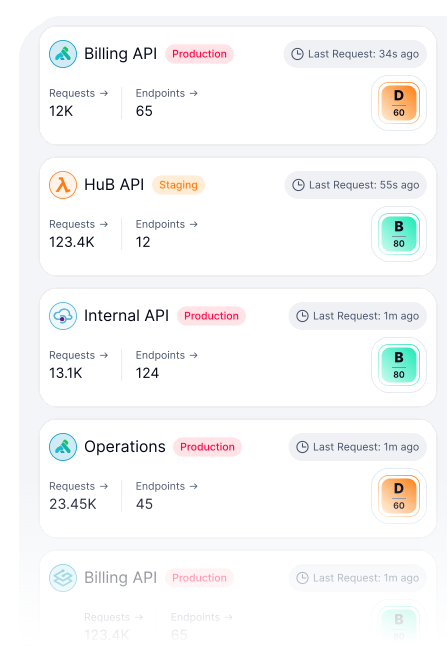
Most organizations cannot tell you exactly how many APIs they run. Endpoints accumulate across microservices, AWS Lambda functions, Azure APIM configurations, and Kong gateways faster than any registry stays current. Treblle solves this at the source: continuous discovery across code repositories and live traffic builds a complete inventory automatically, and the Holistic Overview surfaces that inventory as a single operational picture across every team, product, and environment.
Continuously scans source code repositories, API gateways, and live traffic to build and maintain a complete API inventory without manual registry updates.
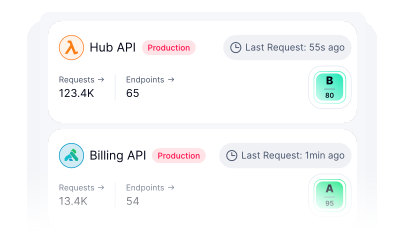
Surfaces the complete API inventory as a single operational view across teams, environments, and infrastructure providers. Every API visible from one place.
API Scoring
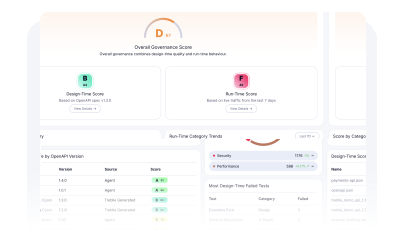
Separate scores for design quality, performance, and security give you three numbers to track and three separate conversations to have. Treblle's Composite API Heartbeat combines automated quality scoring across all dimensions into a single signal, updated continuously as runtime data changes. Real-Time API Vitals feed live performance and error data directly into the score so it reflects production reality, not last week's review.
Evaluates each API across design quality, runtime performance, security posture, documentation completeness, and compliance coverage without manual review.
A single score that combines all quality signals into one production-readiness indicator. Updates continuously as runtime data and security signals change.
Live performance data including latency, error rates, and throughput feeds directly into each API's score, keeping it accurate as production conditions shift.
Cross-Signal Correlation
Security tools flag threats. Design tools flag spec violations. Analytics tools show usage. None of them talk to each other, which means a security finding on an endpoint with poor design quality and rapidly growing consumer adoption requires three separate investigations to understand its true risk. Treblle connects these signals: Cross-Signal Security correlates threat findings with design posture and usage context, Design-to-Runtime tracks drift between what was specified and what is running, and Consumer Intelligence surfaces which users and integrations are driving risk-adjacent behavior.
Correlates security threat findings with API design quality, consumer behavior, and runtime performance to show the full risk context of each finding, not just the event itself.
Tracks each API from its OpenAPI spec through production, surfacing drift between intended behavior and actual runtime behavior so teams address the right issues.
Identifies which consumers, integrations, and client types are driving unusual traffic patterns, concentrated usage on degraded endpoints, or behavior that correlates with security events.
Predictive Risk
By the time an API causes an incident, the signals were visible earlier: a heartbeat score declining over two weeks, growing consumer load concentrated on an endpoint with a known design flaw, a security threat level that escalated without triggering a human review. Treblle's Predictive Risk Detection surfaces these patterns before they produce downtime. Executive Dashboards then translate the full intelligence picture into views built for CTOs, CISOs, and API product owners who need answers without filtering log data themselves.
Identifies APIs trending toward failure by combining score trajectory, traffic growth, security posture, and design drift into early warning signals, before incidents occur.
Translate API health data into leadership-ready views covering aggregate API scores, compliance posture trends, security risk levels, and consumer adoption metrics.
Treblle works best when working in unison. Check out other capabilities that will help you make the most out of your API landscape.
API Observability
The same full-payload capture that powers observability simultaneously feeds compliance evaluation, with no additional instrumentation.
API Governance
Governance scores factor in compliance posture alongside design quality, performance, and security, giving a complete picture of each API's maturity.
API Security
Compliance signals feed directly into security threat scoring, so a GDPR violation on an endpoint raises the security risk level for the same traffic.
All Systems Operational
Gartner: Magic Quadrant, 2025
Gartner AI API Strategy, 2025
Everest Group: Enterprise App Integration Platforms, 2026