
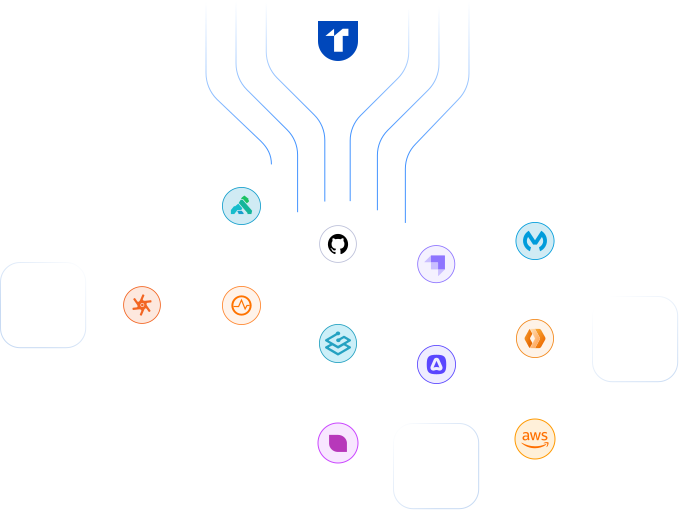
Link your GitHub repositories and API gateways, and install the Treblle SDK. No agents, no config files, no per-service setup.
Every API is discovered, classified, and tagged with owner, environment, and technology metadata, applied automatically across all three sources simultaneously.
New APIs appear when deployed. Decommissioned services fall off. No manual updates, no spreadsheets, no wiki maintenance required.
What is API Discovery?
API discovery is the automated process of identifying and cataloging every API operating within an organization's infrastructure, across source code, gateways, and live traffic. In large engineering organizations, APIs accumulate faster than they're documented, creating inventory gaps that expose security risks and block governance efforts. Treblle's API discovery runs continuously across code repositories, API gateways, and traffic data to maintain a structured, always-current record of every API you run.
Multi-Source Discovery
Most organizations discover APIs when something breaks. Treblle scans your GitHub repositories, connects to every major API gateway, and cross-references live traffic, building one inventory across AWS, Azure, GCP, and on-prem simultaneously. No per-cloud tooling. No manual reconciliation.
Code-based API Discovery
Scans GitHub repositories to detect APIs directly from source code, regardless of framework, language, or deployment status.
Gateway-based API Discovery
Connects to any API gateway to inventory every registered API automatically, with no vendor lock-in.
Cross-Cloud Inventory
Discovers APIs across AWS, Azure, GCP, and hybrid environments in a single view, with no per-cloud tooling required.
Automatic Metadata
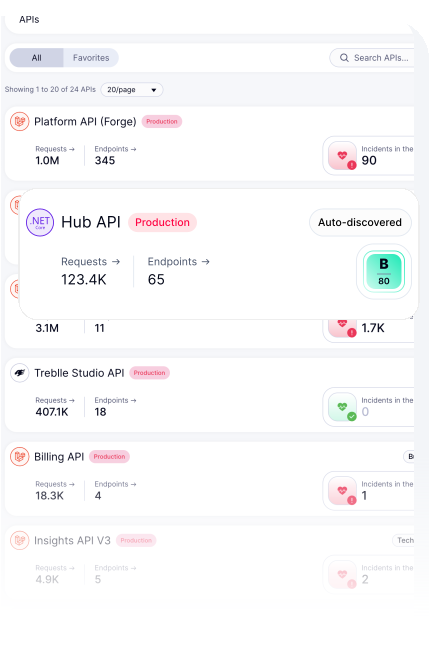
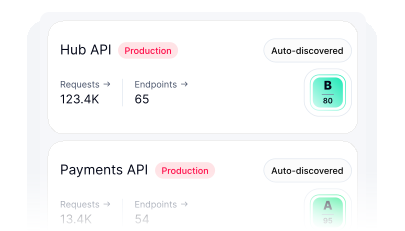
Treblle doesn't just find APIs: it attaches ownership, domain classification, environment tags, and technology metadata to each one. Every team, every environment, every service, organized from the first scan, without a spreadsheet in sight.
Associates every API with its responsible team or individual automatically, closing the accountability gap that grows with sprawl.
Groups discovered APIs by domain, business function, and technology stack, giving architects a structured taxonomy without manual effort.
Automatically captures owners, environments, categories, and technologies for each API, with no manual tagging or maintenance.
Shadow API Detection
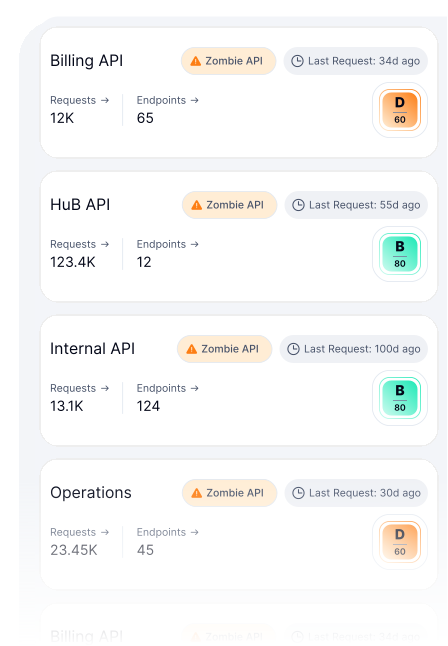
Shadow APIs, including undocumented services, zero-traffic endpoints, and deprecated routes still accepting calls, are where breaches start. Treblle surfaces them at the route level, not just the service level, so your security team can act before anyone else does.
Identifies APIs with zero traffic or no documentation that still exist in your infrastructure, eliminating blind spots before they become exposure.
Maps every individual endpoint across each discovered API, giving route-level visibility rather than service-level awareness alone.
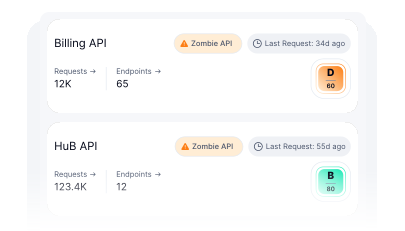
Continuous Discovery
As services deploy and decommission, the catalog updates itself. New APIs appear the moment they're detected. Removed services fall off automatically. No one has to remember to update a wiki, a spreadsheet, or a Confluence page.
Keeps your API inventory current as new services are deployed or decommissioned: your catalog reflects reality, not a point-in-time snapshot.
Discovery runs out of the box. Connect your sources and Treblle does the rest, with no agents, scripts, or config files to maintain.
Treblle works best when working in unison. Check out other capabilities that will help you make the most out of your API landscape.
API Catalog
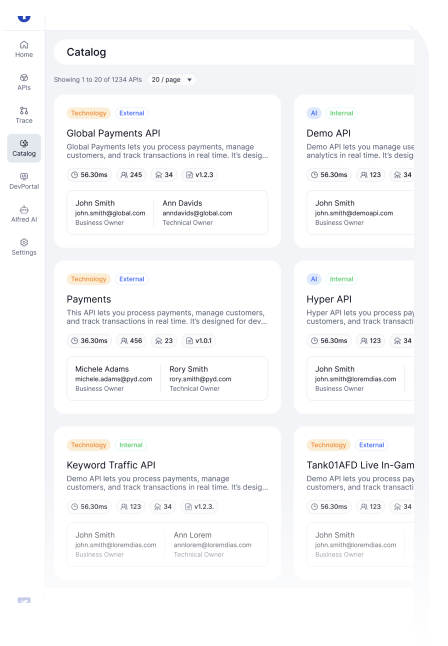
Promote discovered APIs into a browsable, organization-wide catalog with interactive documentation for every team.
API Governance
Governance scores factor in compliance posture alongside design quality, performance, and security, giving a complete picture of each API's maturity.
API Security
Connect governance quality data with real-time threat detection across 100% of your API traffic.

All Systems Operational

Gartner: Magic Quadrant, 2025
Gartner AI API Strategy, 2025

Everest Group: Enterprise App Integration Platforms, 2026


