Why Treblle
Platform
Trust & Compliance
Pricing
Resources
Company

API Catalog

A Single, Accurate Registry of Every API Your Organization Runs

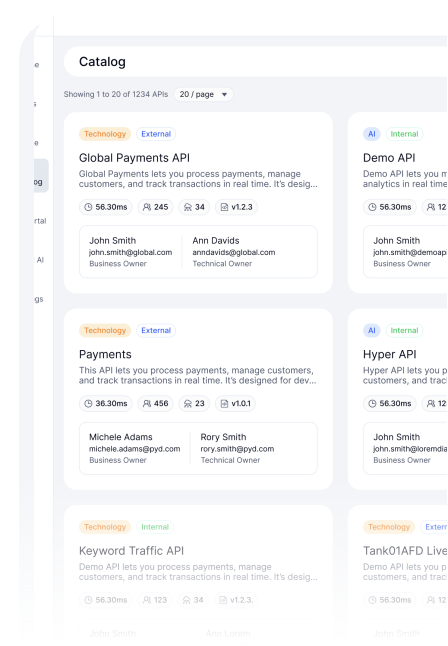
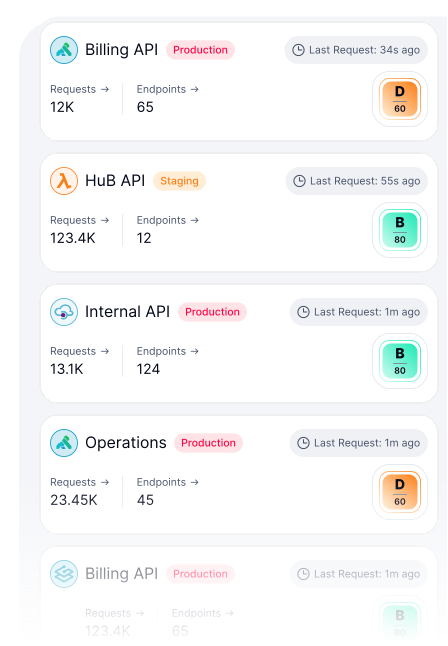
Treblle's API Catalog gives every team organization-wide visibility into what APIs exist, who owns them, how they are performing, and how consumers can integrate with them, updated automatically without a manual publishing process.

APIs are discovered automatically

Treblle continuously scans source code repositories, gateways including Kong and AWS API Gateway, and live traffic to populate the catalog. Every API appears in the registry without requiring manual registration from engineering teams.

Ownership and metadata are resolved

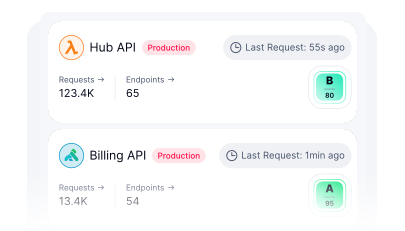
Each catalog entry is enriched with ownership data, current health metrics, documentation links, and usage statistics. Teams can see who owns an API, how it is performing, and who is consuming it from a single view.

Controlled publishing reaches consumers

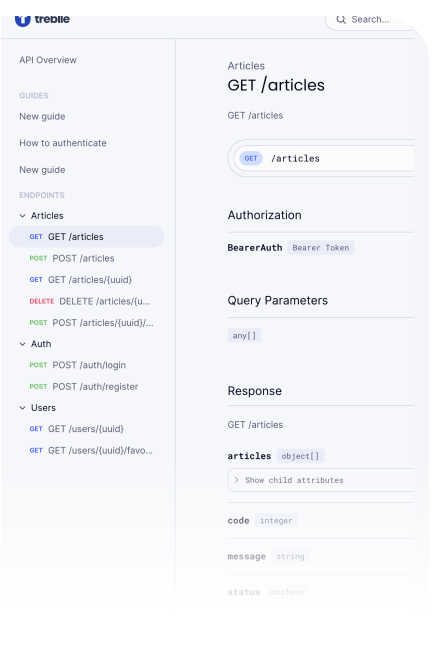
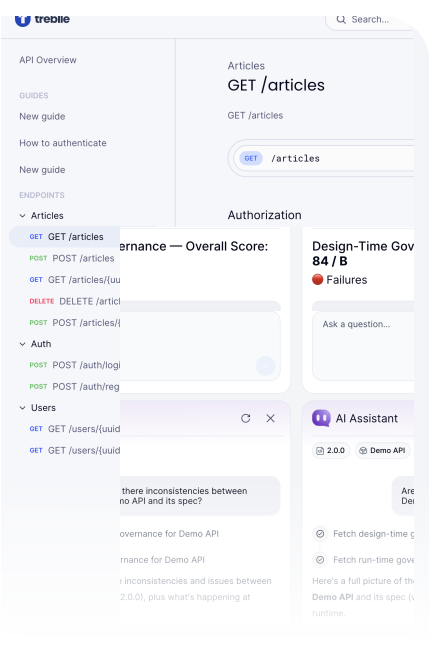
Teams decide which APIs are available internally, to partners, or publicly. Published APIs get interactive documentation, OpenAPI spec downloads, collections, and SDKs generated automatically for consumers.

Agentic AI cards

What is an API Catalog?

The registry that tells you what APIs exist and who is responsible for them

An API catalog is a centralized registry of all APIs an organization operates, enriched with metadata such as ownership, documentation, usage statistics, and current status. Without a catalog, API knowledge lives in scattered spreadsheets, wiki pages, and the memory of individual engineers. Teams duplicate work, consumers cannot find documentation, and security and governance teams cannot account for every surface they need to cover. A well-maintained catalog covers both internal APIs used between teams and external APIs published to partners or the public, and stays current automatically rather than requiring someone to remember to update a registry every time an endpoint ships or changes.


Free Ebook

Buyer's Guide to API Observability

Organization-Wide Visibility

Every API your organization runs, visible to the teams that need to know

Large organizations routinely discover APIs they did not know existed when they run a security audit or try to decommission a service. Treblle's Centralized API Catalog eliminates this by building and maintaining the inventory automatically. Organization-Wide Access means every team, from engineering to security to product management, can see the full catalog with appropriate permissions. Ownership Visibility ties each API to the team and individual responsible for it, so 'who owns this?' has an answer that does not require asking around.

Centralized API Catalog

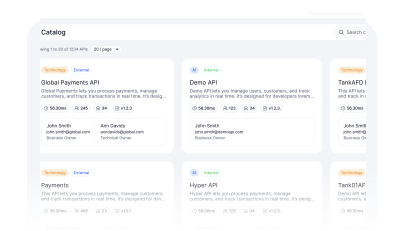
A single registry of all APIs across your organization, populated automatically from discovery and enriched with documentation, ownership, and usage data. The organization's source of truth for what APIs exist.

Organization-Wide Access

The full catalog is accessible to every team with appropriate permissions. Engineering, security, compliance, and product teams all work from the same registry without maintaining separate inventories.

Ownership Visibility

Each API entry includes team and individual ownership resolved from repository and deployment metadata. No more 'who owns this endpoint?' conversations when an incident or audit requires an answer.

Consumer Publishing

Publish APIs to consumers with interactive docs and instant downloads

Getting an API into a consumer's hands used to mean writing documentation, building a portal, generating a collection manually, and hoping the spec was current. Treblle handles all of this from a single publish action. Controlled API Publishing lets teams choose visibility per API. What consumers receive is interactive documentation they can use to make real API calls, an OpenAPI spec they can download, and collections and SDKs generated automatically, all from the same catalog entry that powers internal visibility.

Controlled API Publishing

Set visibility per API: internal only, partner-restricted, or publicly accessible. Publishing status is independent of the internal catalog entry, so all APIs are tracked regardless of external exposure.

Interactive Documentation

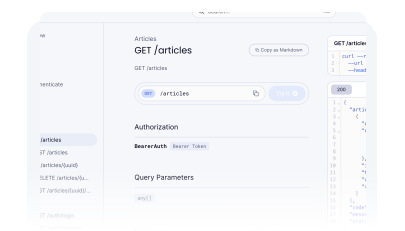
Every published API gets interactive documentation that lets consumers make real API calls directly in the browser. No third-party tool or separate sandbox environment needed to test an integration.

OpenAPI Spec Download

Consumers can download the current OpenAPI specification for any published API directly from the catalog. The spec reflects actual production behavior, not a manually maintained document.

Collection and SDK Generation

Generates request collections for testing tools and client SDKs in multiple languages automatically from each API's specification. Consumers start with working code, not a blank file.

Usage Data and API Access

Statistics per API and programmatic access to catalog data

A catalog that shows you what APIs exist but not how they are being used is missing half the picture. API Statistics in Treblle surface request volume, consumer count, error rates, and performance trends per catalog entry, so teams can see adoption patterns and health without switching to a separate analytics tool. Catalog API Access exposes this data programmatically, making the catalog a data source for internal developer platforms, CI/CD pipelines, and custom dashboards rather than just a web interface to visit.

API Statistics

Per-API usage metrics including request volume, unique consumer count, error rates, and latency trends. Usage data surfaces directly in each catalog entry without switching to a separate analytics view.

Catalog API Access

Exposes catalog metadata through an API. Integrate registry data into internal developer portals, CI/CD pipelines, or custom tooling without requiring teams to use the Treblle UI directly.

AI-Assisted Integration

Consumers get integration help grounded in your actual API

Catalog entries are only useful if consumers can act on them. When a developer finds an API they want to integrate with, questions come immediately: how does authentication work for this specific API, what does this response field mean, how should I handle the rate limit headers. Treblle's AI Integration Assistant answers these questions in plain language using your actual API documentation and production behavior as the knowledge source, reducing the time from 'I found the API' to 'I have working code.'

AI Integration Assistant

Answers consumer integration questions using your API's actual documentation and observed production behavior. Reduces onboarding friction and support load for every API published in the catalog.

Related Capabilities

Treblle works best when working in unison. Check out other capabilities that will help you make the most out of your API landscape.

API Discovery

Know every API in your inventory before you secure it. Discovery feeds the baseline that shadow API detection measures against.

Explore API Discovery

API Documentation

Auto-generated, always-current documentation that feeds the catalog's consumer-facing interactive docs, spec downloads, and SDK generation without a manual publishing step.

Explore API Documentation

API Governance

Governance scores factor in compliance posture alongside design quality, performance, and security, giving a complete picture of each API's maturity.

Explore API Governance

API Catalog: Common Questions

An API catalog is a centralized registry of all APIs an organization operates, enriched with metadata such as ownership, documentation, usage statistics, and current status. It serves as the single source of truth for what APIs exist, who owns them, and how to consume them. An effective API catalog covers both internal APIs used between teams and external APIs published to partners or the public, and stays current automatically rather than requiring manual updates.

An API gateway manages traffic routing, authentication, and rate limiting for APIs in transit. An API catalog is a registry and discovery layer: it tells you what APIs exist, who owns them, where they are documented, and how they are being used. An organization may have multiple gateways (Kong, AWS API Gateway, Azure APIM) while maintaining a single API catalog that covers all of them.

Treblle populates the API catalog automatically through continuous discovery across source code repositories, API gateways, and live traffic. When a new API is deployed or an existing one is modified, the catalog updates without requiring a developer to manually register the change. Ownership Visibility tracks which team or individual owns each API based on repository and deployment metadata.

Yes. Treblle's API Catalog includes Interactive Documentation for every published API, allowing consumers to make real API calls directly in the browser without leaving the catalog. OpenAPI specs can be downloaded, and collections for testing tools and SDKs in multiple languages are generated automatically for each API.

Controlled API Publishing in Treblle lets teams decide which APIs are visible to internal teams, which are shared with select partners, and which are published publicly. Publishing status is separate from the internal catalog entry, so all APIs are tracked internally regardless of whether they are exposed externally. Teams can update visibility without removing APIs from the internal registry.

Yes. Treblle's Catalog API Access exposes catalog data through an API, letting you integrate catalog metadata into internal tooling, developer platforms, CI/CD pipelines, or custom dashboards. This means the catalog is not just a UI layer but a data source other systems can query.

Give every team a complete, accurate API registry

Talk to our architecture team about deploying the Treblle API Catalog across your organization.

Treblle

All Systems Operational

Gartner: Magic Quadrant, 2025

Gartner AI API Strategy, 2025

Everest Group: Enterprise App Integration Platforms, 2026

GDPR CompliantSOC 2ISO 27001:2022HIPAA
© 2026 Treblle. All Rights Reserved.
Privacy Policy
Terms of Service
LinkedInYouTubeGitHubX / Twitter
© 2026 Treblle. All Rights Reserved.
Privacy Policy
Terms of Service
LinkedInYouTubeGitHubX / Twitter