
api-security
API Security Posture Management: What It Is and Why It Matters

Summarize with


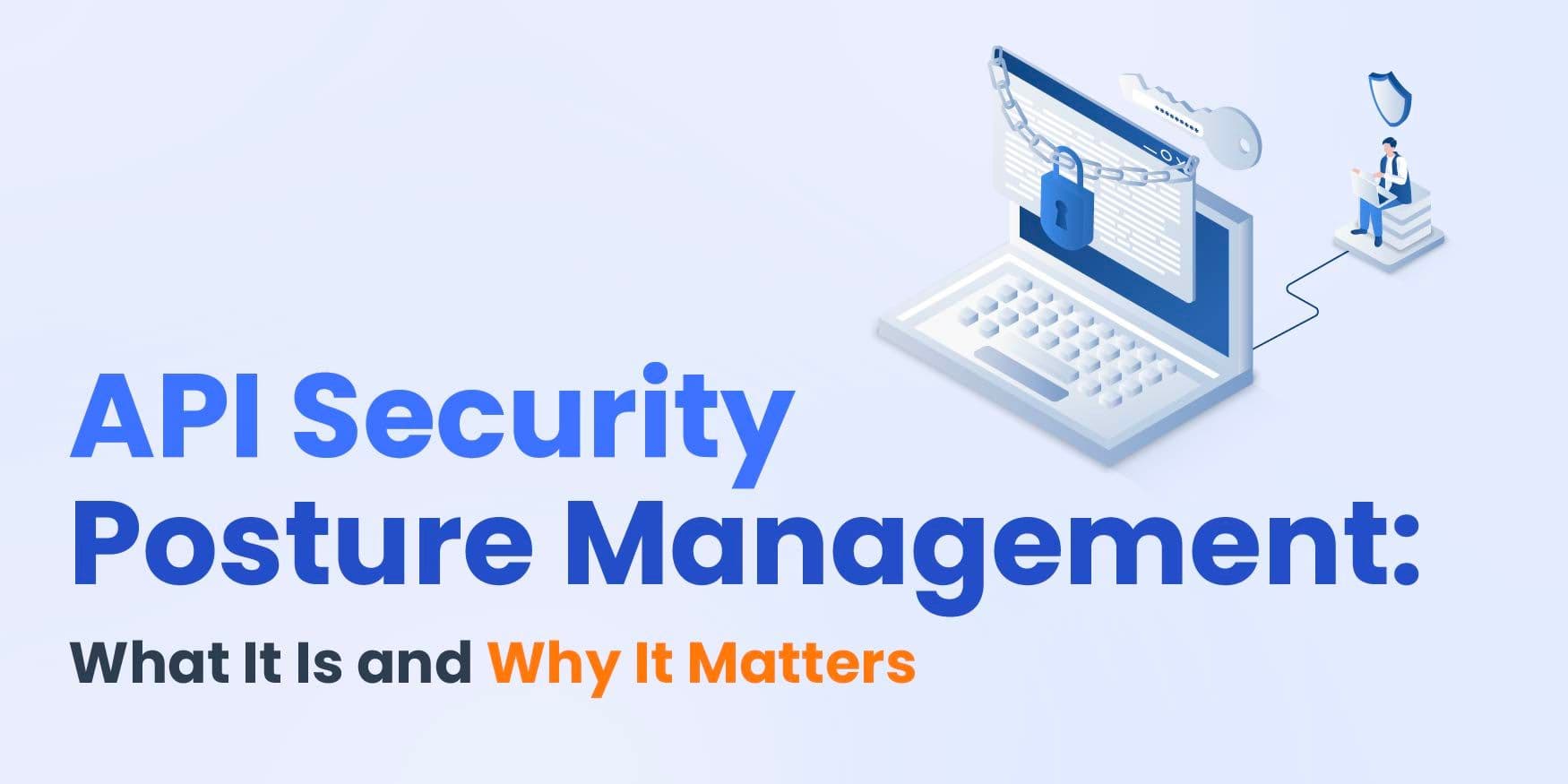
API security posture management (ASPM) is the practice of continuously measuring, tracking, and improving the security state of an API portfolio.
Traditional security: Is this specific API vulnerable?
ASPM: What is the overall security state of our APIs, how is it changing over time, and where are the highest-priority gaps?
A test answers the first question. A score answers the second.
Treblle's report analysis of production API traffic shows that the Global API Scorecard in 2025 was 58/100, a failing grade. Security hygiene remains consistently poor across the industry despite strong performance metrics elsewhere. 47% of APIs process requests with no authentication. 42% of API traffic remains unencrypted. Only 15% of APIs have rate limiting in place.
ASPM is the framework that shows the difference and helps you close it systematically.
Posture refers to the overall security state of a system or environment. It is the aggregate of all configurations, controls, vulnerabilities, and exposures that determine how well-defended a system is at any given moment. For APIs specifically, posture covers authentication enforcement, transport security, input validation, rate limiting, endpoint exposure, and alignment with security standards.
API security posture management adds three things to this definition:
ASPM is distinct from vulnerability scanning, which runs at a point in time and produces a list of specific issues. It's distinct from penetration testing, which simulates an attacker against a known target. And it's distinct from API monitoring, which tracks availability and performance. ASPM aggregates signals from all of these into a continuous posture score. That score tells security and engineering teams where their API surface is strong, where it's weak, and whether the gap is narrowing or widening.
A posture score without trend data is a snapshot. A posture score with trend data is a program. Knowing your score is 61/100 tells you where you are. Knowing it was 54 three months ago tells you the work is having an effect. Knowing it dropped from 61 to 58 last week tells you something changed.
Traditional API security approaches, including DAST, penetration testing, and manual code review, share a common limitation: they're periodic. They assess security at the moment of the test. Between tests, APIs change, new endpoints are deployed, configurations drift, and the threat landscape shifts. The test result ages the moment it's produced.
ASPM replaces the periodic model with continuous assessment. Instead of running a scan before a release, posture is measured from the instrumentation that's already running in production: observability data, authentication logs, traffic patterns, threat signals. The score updates continuously as the API surface changes.
The practical difference shows up in what each approach catches. Traditional scanning catches known vulnerability patterns in the endpoints you point it at. ASPM catches drift: an endpoint that was secure last month and isn't today, an authentication configuration that changed in a deployment, a new endpoint that appeared in production without going through security review. Drift, not zero-day vulnerabilities, creates most API security incidents. The configurations were correct, but then they changed.
Traditional approaches also tend to be siloed. Security testing happens in the security team's tooling. Observability data lives in the engineering team's stack. Governance scoring, if it exists at all, is a separate exercise. ASPM brings those signals together into a single posture score that reflects both what the spec says (design-time assessment) and what production traffic shows (runtime assessment).
A good posture score reflects a set of foundational controls. The API security best practices and API security checklist articles cover each control in detail.
The 2025 API Security Checklist
Stay ahead of emerging threats with our 2025 API Security Checklist.
Download Ebook
A meaningful posture score aggregates multiple dimensions into a single number that can be tracked over time and compared across the portfolio. The dimensions that matter most for API security posture are:
Treblle's Security Score evaluates each endpoint across authentication enforcement, HTTPS/TLS status, IDOR exposure checks, and security header presence. It updates continuously from live traffic, so the score reflects current production state, not the state of the API at the last scheduled review.
A complete posture assessment has two layers that measure different things and catch different problems.
Design-time assessment evaluates the API spec and configuration before deployment: are authentication requirements defined in the OpenAPI spec, are security schemes correctly documented, are endpoint categories and sensitivity levels declared, do the spec and implementation agree on what's required? Design-time assessment catches gaps before they reach production. It's the shift-left layer of ASPM.
Treblle's Custom Governance Rules apply design-time posture checks to every spec change automatically. These are Spectral-based rules that run in CI/CD pipelines. A rule that requires every endpoint to declare an authentication scheme, or flags endpoints that expose PII without a documented sensitivity classification, fires in the developer's pipeline before the change is merged.
Runtime assessment evaluates what's actually happening in production: which endpoints are receiving unauthenticated requests in practice, which are being targeted by automated attacks, which have latency or error patterns that suggest misuse or misconfiguration. Runtime assessment catches the gap between what the spec says and what production shows: authentication that's defined but not enforced, rate limiting that's configured but not triggering.
Treblle's Authentication Coverage Tracking identifies which endpoints process requests without any authentication in production. It surfaces not just which endpoints lack an authentication declaration in the spec, but which ones are actually receiving unauthenticated production traffic. The distinction matters: an endpoint can have authentication defined in the spec while the implementation silently accepts unauthenticated calls.
Combining design-time and runtime assessment lets posture management catch its most important target: configuration drift. An endpoint can pass a design-time spec review and still degrade in posture over the following six months as traffic patterns change, authentication configurations drift, and new threat patterns emerge.
API security posture management sits at the intersection of security and governance. The security dimension is what controls are in place and whether they're working. The governance dimension is whether those controls are consistently applied across the portfolio, whether they meet the standards the organization has committed to, and whether the posture is improving or declining.
For compliance purposes, including PCI-DSS for payment APIs, HIPAA for health data APIs, and SOC 2 for any API handling customer data, posture scores provide the continuous evidence trail that periodic audits can't. A SOC 2 audit asks, "Were controls in place during the audit period?" A posture score tracked over the audit period shows not just that controls existed, but whether they were consistently enforced, when they degraded, and what remediation action was taken.
Treblle's Governance Score combines Security, Design Quality, Performance, and AI Readiness into a single portfolio-level metric, with the Security sub-score directly reflecting the ASPM dimensions above (Source: Treblle, API Governance Checklist, 2025). For teams working toward the [API governance framework][TODO: link to GOV1 - API Governance pillar] that posture management sits within, the Security dimension of the governance score is the ASPM scorecard expressed as a 0-100 number per endpoint and across the portfolio.
Gartner introduced API security posture management as a distinct category in its API security market analysis, separating it from API gateways (which enforce policies) and API testing tools (which assess individual endpoints). At scale, organizations operate hundreds or thousands of API endpoints across multiple teams and environments. Point-in-time testing and gateway policy enforcement aren't sufficient at that scale. Continuous posture visibility across the full API surface is a separate capability.
Treblle is referenced in Gartner's Magic Quadrant for API Management. The reference reflects Treblle's position as a platform that covers security alongside observability, governance, and documentation from a single instrumentation point. The evaluation criteria that matter in the Gartner analysis, including runtime visibility, policy enforcement, documentation accuracy, and developer experience, align with what ASPM requires: continuous assessment, not periodic scanning.
For teams evaluating API security tools as part of an ASPM program, the practical question is whether the tool provides portfolio-level posture visibility or only endpoint-level vulnerability reporting. The category distinction determines what business problem the tool actually solves.
Security Score. A per-endpoint security grade based on authentication enforcement, HTTPS/TLS status, IDOR exposure checks, and security header presence. It updates continuously from live traffic, so the score reflects the current production state rather than the last scheduled review.
Governance Score (4 dimensions). A 0-100 portfolio-level metric that aggregates Security, Design Quality, Performance, and AI Readiness with per-endpoint breakdown. It provides the trend data (score over time) that turns a snapshot into a program.
Authentication Coverage Tracking. A check that identifies which endpoints process unauthenticated production traffic in practice. It surfaces the gap between what the spec declares as required and what the implementation actually enforces in production.
Automated Threat Scanning. A scan that checks every request and response against 20+ threat categories in real time. It contributes a runtime threat signal to the posture score and alerts on attack patterns, including injection, enumeration, and credential stuffing, that indicate posture degradation before it shows up in a breach.
Custom Governance Rules (Spectral). Design-time posture enforcement in CI/CD, using custom linting rules that flag spec violations before deployment. It closes the gap between policy intent and production reality at the point where it's cheapest to fix.
To see a current posture score across your API portfolio, Treblle's free tier generates Security and Governance scores automatically from the first connected APIs.
The 2025 API Security Checklist
Stay ahead of emerging threats with our 2025 API Security Checklist.
Download EbookWhat is API security posture management?
What is ASPM vs. API security testing?
What does a good API security posture score measure?
How does API security posture management connect to compliance?
What is the difference between design-time and runtime posture assessment?

All Systems Operational

Gartner: Magic Quadrant, 2025
Gartner AI API Strategy, 2025

Everest Group: Enterprise App Integration Platforms, 2026


